

Treatment engineered
around your water.
Frellmann designs custom treatment systems that destroy contaminants on site, from industrial organics and pharmaceuticals to PFAS, instead of capturing them and passing the problem downstream.
Most treatment moves contaminants.
Ours destroys them.
Filters, activated carbon and ion exchange capture contaminants, including PFAS, and leave behind spent media or concentrated waste that still has to be hauled away, stored or treated again. Frellmann's photocatalytic processor (PCP), licensed from Purdue University, breaks contaminants down in the water itself, so there's no secondary waste stream to manage.
01 Characterize. We analyze your water chemistry, flow rate and contaminant load, and map the treatment process you already run.
02 Engineer. We design a system around that data, built from modular PCP units and sized to your contaminant load.
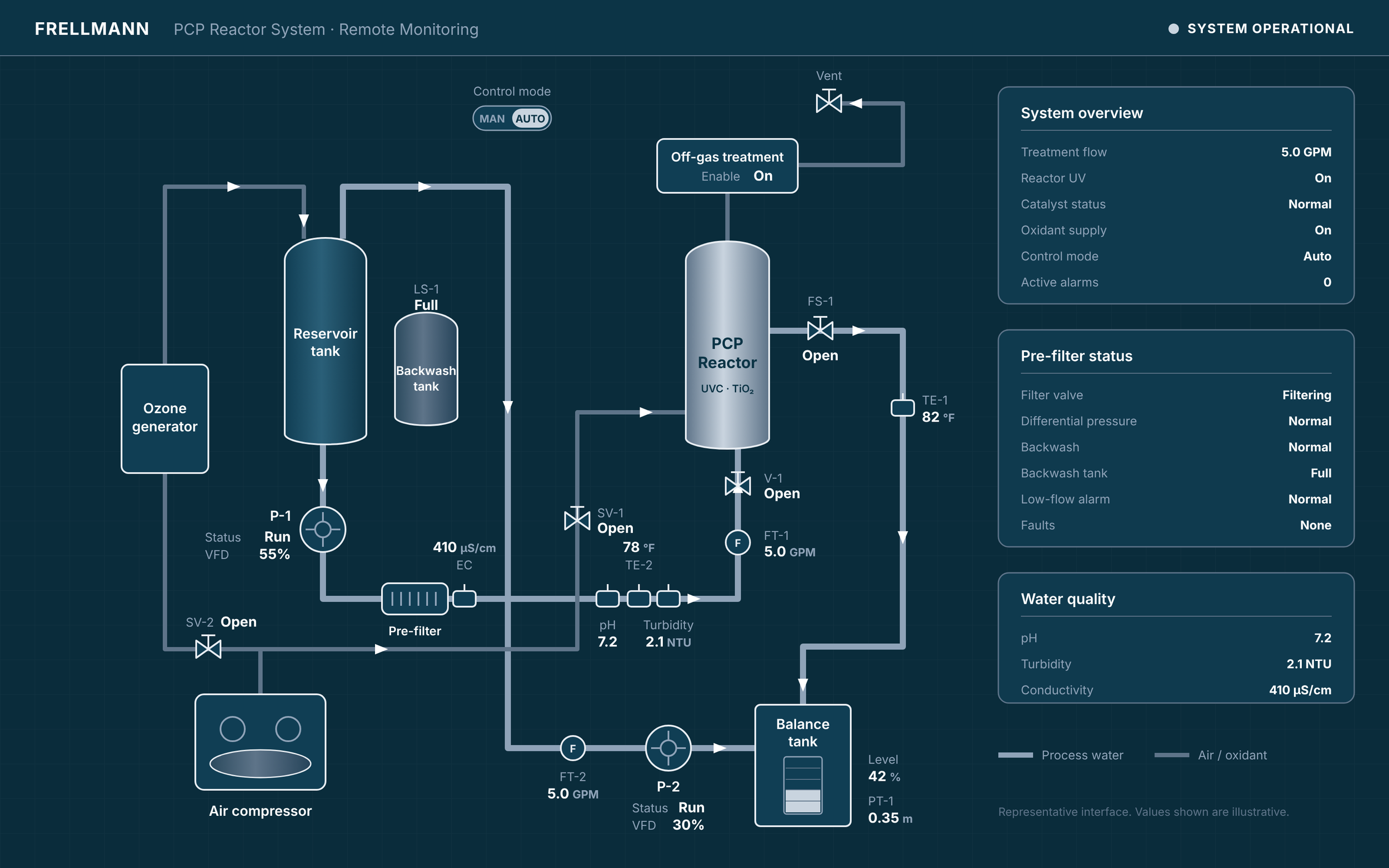
03 Integrate. We install it as a standalone destruction step or inside your existing process, with 24/7 remote monitoring.
Every Frellmann system starts with what's actually in your water: the contaminants, the flow, and the discharge limits you have to hit. The PCP reactor does the destroying. Filtration and conditioning stages are built around it only where your site needs them.
Your water determines
the design.
Independently verified.
12 of 12 PFAS compounds at None Found after treatment of municipal wastewater (EPA Method 537 IDA, Eurofins Lancaster Laboratories)
C–F bonds broken. Fluoride appears after treatment where none came in: evidence the carbon–fluorine bonds were broken, not captured.
60+ Purdue engineering students across two campuses have advanced the technology, licensed from Purdue University
Designed to Destroy
Hazardous Contaminants.
Industrial chemicals: solvents, fuel additives, process chemicals
Pharmaceuticals: active compounds from manufacturing wastewater
Agricultural chemicals: herbicides, insecticides, fungicides
PFAS too. The carbon-fluorine bond is among the hardest in water treatment to break. PCP breaks it, and independent lab testing confirms it.
For operators who need contaminants gone, not moved.
Don’t see your industry? Every system is custom, so
-
Process and commercial waste water.
-
Compost leachate, food waste and other high-strength organic streams.
-
Landfill leachate- one of the most complex, PFAS laden stream to treat.
-
Effluent and backup treatment.
-
Independent, on-site treatment when a primary water source is compromised.
Running today,
not just in the lab.
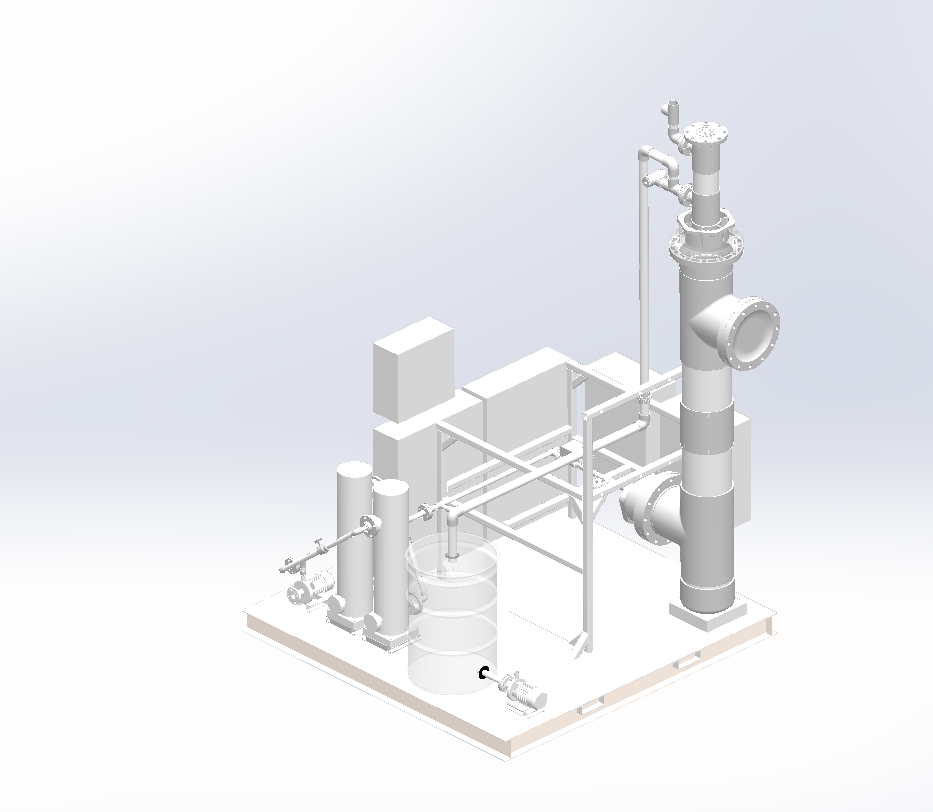
Texas composting facility (July 2026). A continuous-flow PCP system capable of processing 8,640 gallons per day, with treated water reused on site and 24/7 remote monitoring of flow, ozone, filtration, water level and catalyst status.
Next: treating pharmaceutical-contaminated wastewater for a major U.S. county, with deployment beginning in 2027.
Your questions, answered.
-
We start with your water: an analysis of its chemistry, flow and contaminant load, plus a look at the treatment process you already run. From there we show you what your Frellmann system would look like and how it would meet your needs.
-
PCP can run as a standalone destruction step or slot into your existing treatment process. It's built around what you have, instead of replacing it.
-
Carbon, ion exchange, and membranes capture contaminants and leave you with spent media or concentrate to dispose of. PCP breaks contaminants down in the water itself, so there's no secondary waste stream.
-
Industrial chemicals, pharmaceuticals, agricultural chemicals and PFAS, including compounds verified at None Found (NF) by an independent lab.
-
PCP was developed at Purdue University and is licensed through the Purdue Research Foundation. Purdue researchers and students continue to work to improve this technology with us.
Every water stream is different.
Let’s look at yours.
Tell us about your water and your treatment goals. We’ll characterize it and show you what your Frellmann system would look like.